








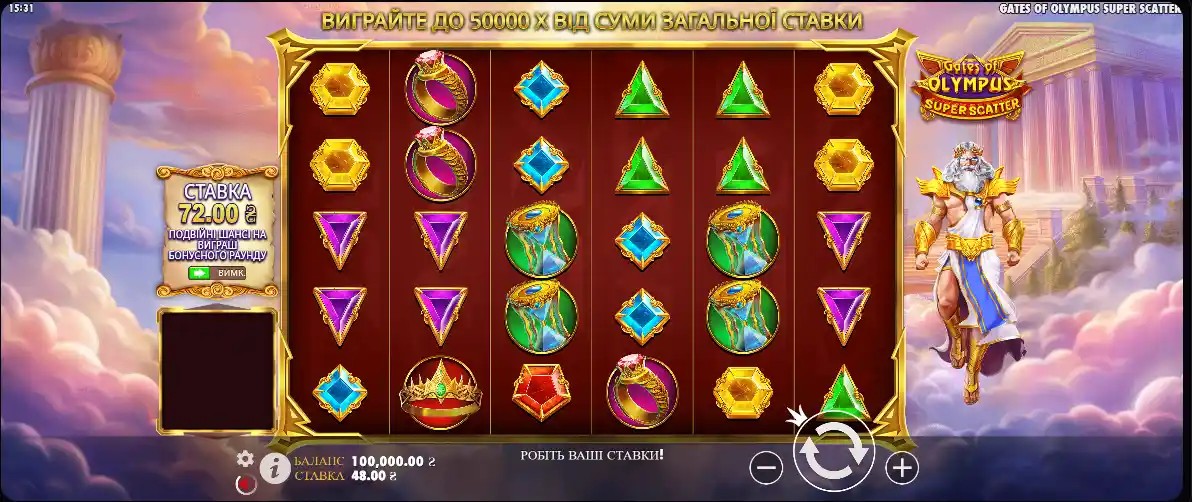
Gates Of Olympus Super Scatter Demo Slot
Learn the game's flow in trial mode, set limits early, and play in Norway only when you are 18+ and want to take breaks each session.
Demo Gates Of Olympus Super Scatter
Imagine opening the game for the first time and everything happens fast - flashing numbers, sounds, small animations trying to draw you in. In 2026, the smartest start is often the calmest. You use trial rounds to understand the screen, not to chase excitement. Only when you understand what you're pressing does the rest actually become fun.
Start with the practicalities: find the bet control, find the rules menu, and find out how to stop. Usually it takes less than a minute, but many skip it because they want to “see what happens”. The result is often that they play longer than planned, and feel that they never quite understand why something is triggered.
In Norway, the framework is simple and important: this is only for 18+. Therefore, use the test phase to build habits that also work later - short sessions, breaks, and clear stopping points before you get carried away.
All promotional incentive structure is clearly stated in writing and/or via electronic means in an easily understood manner. All codes are accompanied by an explanation of what the code is for, who is eligible to use the code, and how it should be used. As such, players are less likely to be confused about what is required of them in order to receive a reward and how the reward will be applied after receiving it. The promotional incentives provided to participants provide them with time to become familiar with the gaming system's mechanics, their interface, and progress, before deciding how deeply they wish to become involved with this platform. Therefore, players are encouraged to participate in an informed manner, rather than being pressured or tempted to act quickly.
Gates Of Olympus Super Scatter Slot Demo
Imagine you like the theme and graphics, but are unsure if the pace suits you in the long run. What you're testing here isn't just “if you win”, but how the game feels when you play normally: a few rounds, a little waiting, small hits, and occasionally a clear moment. If you get restless during quieter periods, it's important to discover that now.
Go through this in order: readability, rhythm, and understanding. Readability means you can see the bet level and result without searching. Rhythm means you have time to think between rounds, not just press. Understanding means you can explain to yourself what happened - without creating “patterns” in your head.
When something unexpected happens, keep it simple: stop after the round and open the rules. If you instead continue to “see if it happens again”, that's often the start of autopilot. In 2026, it's precisely autopilot you want to avoid, especially if you later play with real money.
Gates Of Olympus Super Scatter Demo Game
Imagine you want to test the game as a proper walkthrough, not as a coincidence. Then you need a small plan that is easy to follow. Many players lose track because they change several things at once: bet, speed, maybe auto-play, and then they don't know what actually affected the experience. Make it tidy instead.
Divide the test session into blocks. The first block is about learning the buttons. The second block is about understanding functions and symbols. The third block is about you: can you stop when you've decided to? The last point sounds trivial, but it's often the most important.
Gates Of Olympus Super Scatter Demo Play
Imagine you're on your phone, you don't really have much time, but you feel like you “have” to play a little more because something is approaching. This is the moment you should practice in trial rounds: stopping while you still have control. Decide the number of rounds in advance, play calmly, and stop when the plan is reached - even if you feel you are “close”.
Keep the bet stable at the start. Then make one change, just one, and play another short block. Afterwards, stop and evaluate: did the change make me more impulsive? If the answer is yes, you already know you need stricter limits when playing with real money.
In Norway, playing shorter sessions is also a responsible choice. You get more overview, less stress, and you avoid making financial choices in a moment where you are really just reacting to the pace.
How to Test Symbols and Rules
Imagine a feature is triggered and you're unsure if you need to choose something, or if everything happens automatically. Many click through, hoping it will resolve itself. Better: stop after the round, open the rules menu, and find exactly what triggered the event.
Read the rules in two rounds. The first time before you play much, just to know where the information is. The second time after you've seen a feature in practice, because the text makes much more sense then. If you still don't understand, it's a signal to slow down the pace or keep the session shorter - not a signal to play more.
Imagine always starting with the same three steps: mute notifications, check effort level, and determine a finish line. It takes ten seconds, but it changes the entire session. When you make the start repetitive, it becomes easier to finish without negotiating with yourself.
Also use a 'pause button' as a habit, not as an emergency solution. Get up after a short block, look away from the screen, and ask yourself if you are still playing consciously. If the answer is unclear, the break is already the answer.
Imagine you notice irritation or that you are pressing faster than you are paying attention. These are classic stop signs. Don't try to 'play through' it. End the session, take a break, and only come back if you actually want to play - not because you feel like you have to complete something.
An extra clear sign is the thought 'something has to happen soon'. When you get that, you are often about to play for the feeling, not for entertainment. In that case, it's best to stop.
Account And Safe Start In Norway
Imagine you have tested enough and are considering playing with real money, but you want to avoid stress later in the evening. The safest order is boring in a good way: account first, security second, limits before deposit. Many jump straight to payment because they want to get started, and end up cleaning up in the middle of a session when they are already tired.
In Norway, 18+ applies as a fixed framework. Therefore, only play if you are old enough, and choose solutions that support responsible tools in practice. You don't need to assert details you cannot verify. You need routines that make it easy to stop.
Registration And Account Security
Imagine you want to make a withdrawal later, but are stopped because the account lacks verifications. This often happens when people postpone the 'boring' steps. Do them early: fill in information correctly, use a strong password, and enable extra login if available.
Keep the account private. Log out after the session, especially on shared devices, and avoid saving login information in places others can find. This is also a practical way to ensure that 18+ is actually complied with at home.
Deposit With A Plan, Not With Mood
Imagine you've had an intense round and feel like you should increase your bet because 'something is surely going to happen now'. That's a common trap. Make financial choices before the session starts, not while you are excited. Decide on a session budget that does not affect your everyday finances, and treat it as the price of entertainment regardless of the outcome.
If you notice that you want to top up because you are frustrated, stop and take a break instead. It is often the most responsible decision you can make at the moment.
Withdrawal And Customer Support Without Stress
Imagine you want to end the evening and withdraw part of your balance, but you are tired and click too fast. End the session first. Then go through the withdrawal steps calmly, double-check details, and stick to a consistent method if you can.
If something stops, contact customer support with brief facts: time, device, and what you did right before the problem occurred. Avoid clicking randomly when you are irritated - it often creates more confusion.
Practical Limits And Session Plan In 2026
Imagine you start with a plan, but then time disappears because the game has a steady rhythm. In 2026, it's not enough to 'think' you should be careful. You need a system: timeframe, budget, and a clear stop rule. When the system is in place, you need less willpower in the middle of the session.
It helps to think in short blocks: one block of play, a break, then a new decision. Not 'continue a little' on autopilot.
Budget That Actually Works
Imagine setting a limit so high that you never notice it. Then it doesn't protect you. Instead, set a session budget that is realistic, and a little stricter than you think you need, because pace and excitement can make you more impulsive.
Make it simple: one amount per session, not a large amount for the entire week. When you reach the limit, you stop. Don't negotiate. This is precisely what makes gaming remain controlled entertainment.
Timeframes, Breaks And Reality Checks
Imagine saying 'just ten minutes', and then an hour has passed. It happens more often than people like to admit. Use an alarm or a session timer that actually interrupts the flow, and plan a break in the middle of the session.
A good trick is to use the break to check your body: are you calm, or are you tense and impatient? If you are impatient, stop. If you are calm and the plan still applies, you can continue in a new, short block.
Timeout And Self-Exclusion When You Need It
Imagine you notice that you can't stop once you've decided to. Then a timeout is a practical tool, not a dramatic action. It removes the choice in the moment and gives you space to calm down.
If the pattern repeats, a longer exclusion period may be appropriate. It's not about punishment. It's about creating distance when you need it, so you can make better choices later.
Overview Table For A Tidy Session
Imagine you want one simple overview that makes it easy to play controlled. Use the table below as a checklist before you start, not as something you try to remember in the middle of an intense round.
|
Control Point |
What You Set Up |
When It Helps Most |
|
Session Budget |
Max amount per session |
When you tend to top up |
|
Timeframe |
Alarm or session timer |
When time 'disappears' in the flow |
|
Deposit Cap |
Daily or weekly limit |
When impulses come in the evening |
|
Loss Limit |
A clear stop level |
When you feel the urge to chase losses |
|
Breaks |
Fixed break in the middle of the session |
When the pace makes you impatient |
|
Timeout |
Break for hours or days |
When you can't stop yourself |
Mobile, Technology, and Troubleshooting
Imagine playing on your mobile outside, the network is a bit shaky, and you tap twice because you think nothing is happening. Suddenly you're annoyed, and irritation makes you more impulsive. Therefore, mobile gaming in 2026 is more about environment than “tips”: stable network, fewer distractions, and short sessions.
Feel free to test both mobile and PC. On mobile, you are more easily interrupted. On PC, sessions often become longer because it feels comfortable. Choose the platform where you can most easily stick to your budget and stop point.
Setup for Stable Game Flow
Imagine you want a calm session, but have many apps open and notifications flashing. You'll quickly lose focus. Close unnecessary apps, mute notifications, and ensure enough battery before you start.
If the connection is unstable, stop and continue later. Pushing on in frustration usually makes the session worse and your choices more impulsive.
Speed and Autospin
Imagine you turn up the speed “just a little” and then lose track of how much you're actually playing. High speed can feel efficient, but it makes it harder to keep track. Keep the pace at a level where you can see what's happening, and only use automatic features with clear stop criteria.
If you notice you become more restless when the pace increases, turn it down again. The goal is not the most rounds possible. The goal is a session you control.
Common Errors and a Calm Solution
Imagine the screen freezes and you click blindly to make it work. That's a classic, and it often creates more mess. Do a tidy check: update, close and reopen, restart the device, and try a different browser if you have to.
Note what happened and when. This makes customer support easier and prevents technical irritation from fueling more rounds.
Device Security in Everyday Life
Imagine someone borrows your tablet at home, or you lose your phone. Use a screen lock, log out after your session, and avoid saving login information on shared devices. This is a simple habit that protects both you and your account.
In an 18+ environment, this is especially important. Good device security ensures that gaming remains a conscious adult activity, not something that happens “by accident”.
Responsible Gaming in Norway in 2026
Imagine you start for entertainment, but after a while, you're mostly playing to keep the feeling going. That's when limits and breaks matter most. Responsible gaming in 2026 is about systems, not morals: budget before the session, time limits that break the flow, and tools like timeout when you notice you can't stop.
In Norway, 18+ applies as a fixed framework. If you notice that gaming is taking up more space in your daily life than you'd like, it's smart to take a longer break and talk to someone you trust. Early interventions are often the most effective.
Brief Summary for a Tidy Test Session
Imagine you want to be able to say afterward: “I learned something, and I stopped as planned.” Start calmly, read the rules when something is unclear, and change only one thing at a time. Set a budget and time frame before playing with real money, and use breaks as part of the plan.
If your mood shifts to irritation or haste, stop immediately. The best skill in slots is often to quit when you decided to quit.
FAQ
How do I use demo mode without losing control?
Start with a short session and decide the number of rounds in advance, so you don't slip into autopilot. Mute notifications, play at a calm pace, and stop when the plan is met even if you feel you're “close to something”. If you become restless or start changing bets on impulse, it's a clear signal for a break. When you practice stopping early, it becomes much easier to play responsibly later.
What should I read in the rules before playing with money?
Look for the symbol overview, how winnings are displayed, and what triggers special features, so you don't have to guess in the middle of a round. Read once before playing a lot to find where the information is, and read again after you've seen the mechanics in practice. If you still don't understand, slow down and keep the session shorter. A clear understanding brings calm, and calm leads to better decisions.
How do I set a budget that actually sticks?
Choose a session budget that doesn't affect your everyday finances, and decide that it's the price for entertainment regardless of the outcome. Keep the budget per session instead of a large “weekly budget”, because it's easier to stop when the framework is clear. Make the limit a bit stricter than you think you need, as pace can make you more impulsive. When you reach the limit, stop without negotiation.
What do I do if I feel like chasing losses?
End the session immediately and take a break long enough for the stress to subside. Change activity, go for a walk, or do something that breaks the pattern before considering playing again. If this happens often, use a timeout or a longer self-exclusion period, because it removes the choice in the moment. Taking action early is easier than cleaning up after a night that went too far.
Is it safer to play on mobile or PC?
It depends on where you maintain the best focus. Mobile offers more interruptions and can make you more impulsive, while PC often makes sessions longer because it feels comfortable. Test both in short blocks and choose the platform where you most easily follow your budget and stop point. If the technology annoys you or the network is unstable, stop and continue later.
When should I use timeout or self-exclusion?
Use timeout when you notice you can't stop when you've decided to, or when you play to relieve stress. A longer self-exclusion period is suitable when the pattern repeats itself and you need more distance to find calm. This is not about guilt, but about removing temptation in a pressured moment. Feel free to combine the break with support from someone you trust if it feels difficult to manage alone.
How can I ensure I comply with the 18+ requirement at home?
Keep your account private, use a screen lock on your device, and log out after each session, especially on shared devices. Avoid saving passwords in open notes or where others can find them. If children or others have access to the device, use extra security measures that make logging in more difficult without you. In Norway, 18+ is a fixed framework, and good habits make it easy to follow in practice.